About · Based between Riyadh and London
Clinician shaping ethical AI for healthcare.
A clinician-scientist whose work sits where medicine, ethics and artificial intelligence meet. Today his attention is on one question: how AI can make healthcare safer without weakening the clinical judgement and professional responsibility that patients rely on.
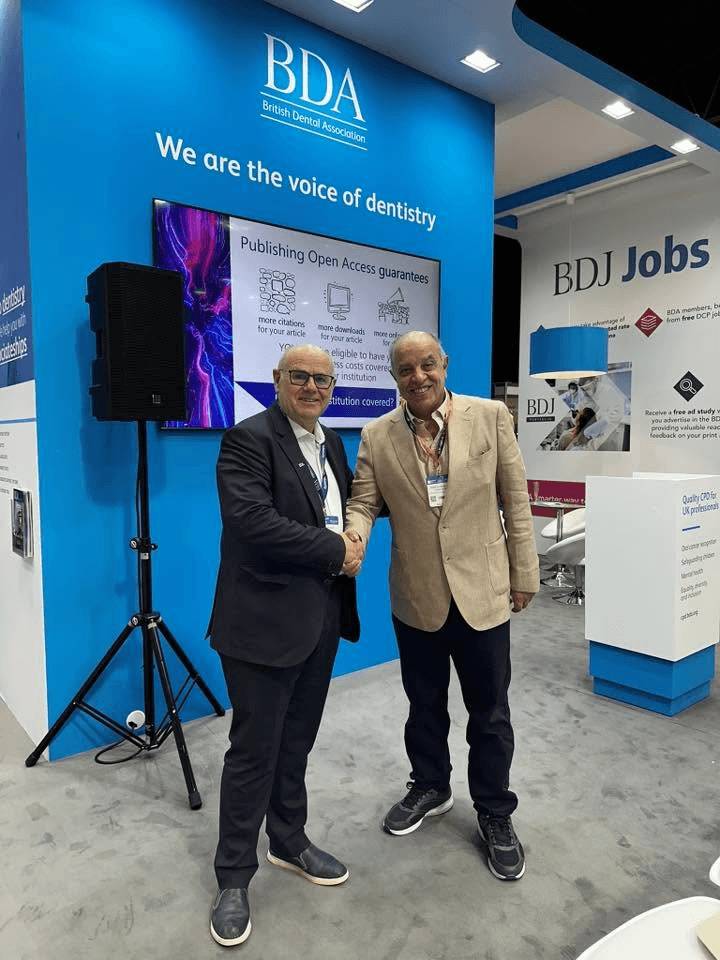
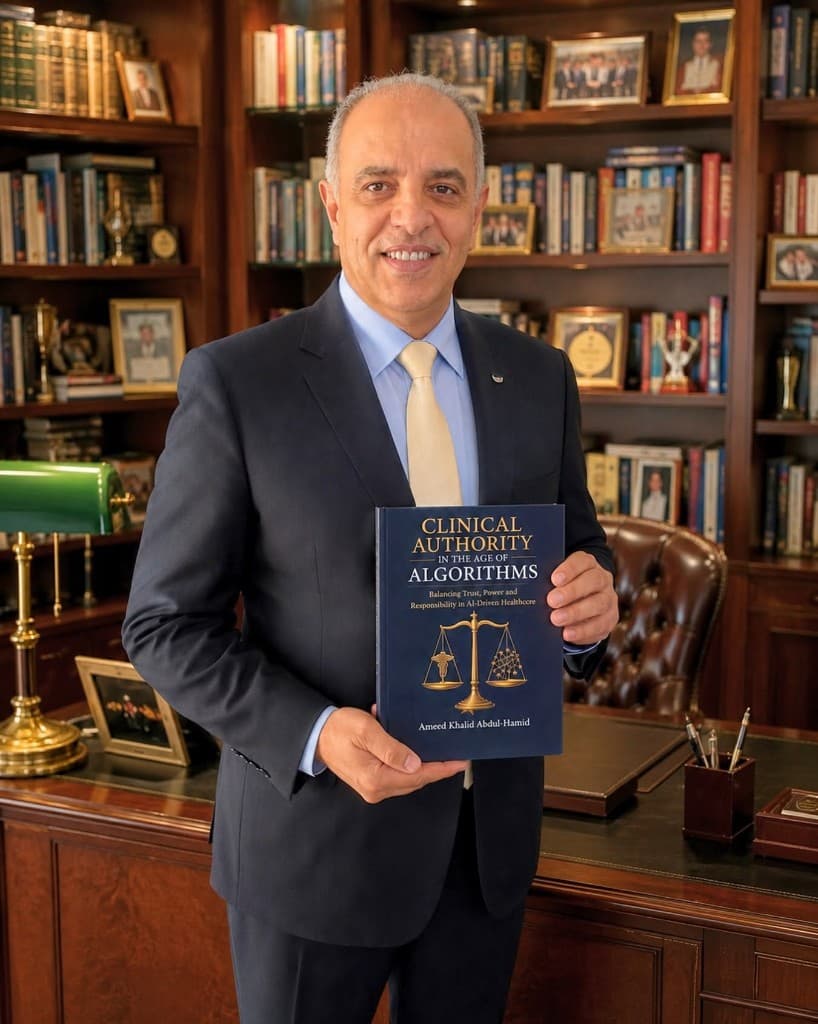
Professor Ameed Khalid Abdul-Hamid
Clinician-Scientist | Visiting Professor | AI Governance & Healthcare Ethics
His work argues that AI must augment clinicians, not replace them: algorithmic insight paired with human judgement, ethics, and compassion. Through his books, his columns for Asharq Al-Awsat and his lectures, he invites the profession to ask where AI adds value — and where human insight must remain indispensable.
Based between Riyadh and London, Professor Ameed brings more than four decades of clinical and academic experience spanning dentistry, oral & maxillofacial surgery, international health diplomacy, and the ethical governance of artificial intelligence in healthcare.
He has lived and worked extensively in Saudi Arabia, contributing to UK–Saudi medical collaboration and observing the Kingdom’s growing role as a global hub for digital health and AI innovation under Vision 2030.
Over the years, Professor Ameed has lectured in London, New York, Frankfurt, Dubai, Abu Dhabi, Doha, Cairo, Geneva, Birmingham, Melbourne, Belgrade, Los Angeles and Manama.
Current Focus: From AI Ethics to AI Governance
Professor Ameed’s current work focuses on translating the principles of responsible artificial intelligence into practical healthcare governance — from policy and institutional oversight to clinical implementation. His interests include local clinical validation, patient safety, professional accountability, workforce readiness, and ensuring that AI supports, rather than displaces, human clinical judgement.
Clinical validation
Evidence that AI tools perform safely in real clinical settings and patient populations before they influence diagnosis or care.
Patient safety
AI is adopted only where it measurably protects patients, with clear safeguards when systems fail or should remain silent.
Professional accountability
Keeping responsibility for clinical decisions with identifiable clinicians and institutions — never with the algorithm.
Workforce readiness
Preparing clinicians, educators and healthcare leaders to use, question and oversee AI with confidence.
From principles to practice
Translating AI governance principles into practical implementation — from national policy to hospitals and clinical departments.
A Mission Across Generations
From Humanitarian Law to AI Governance
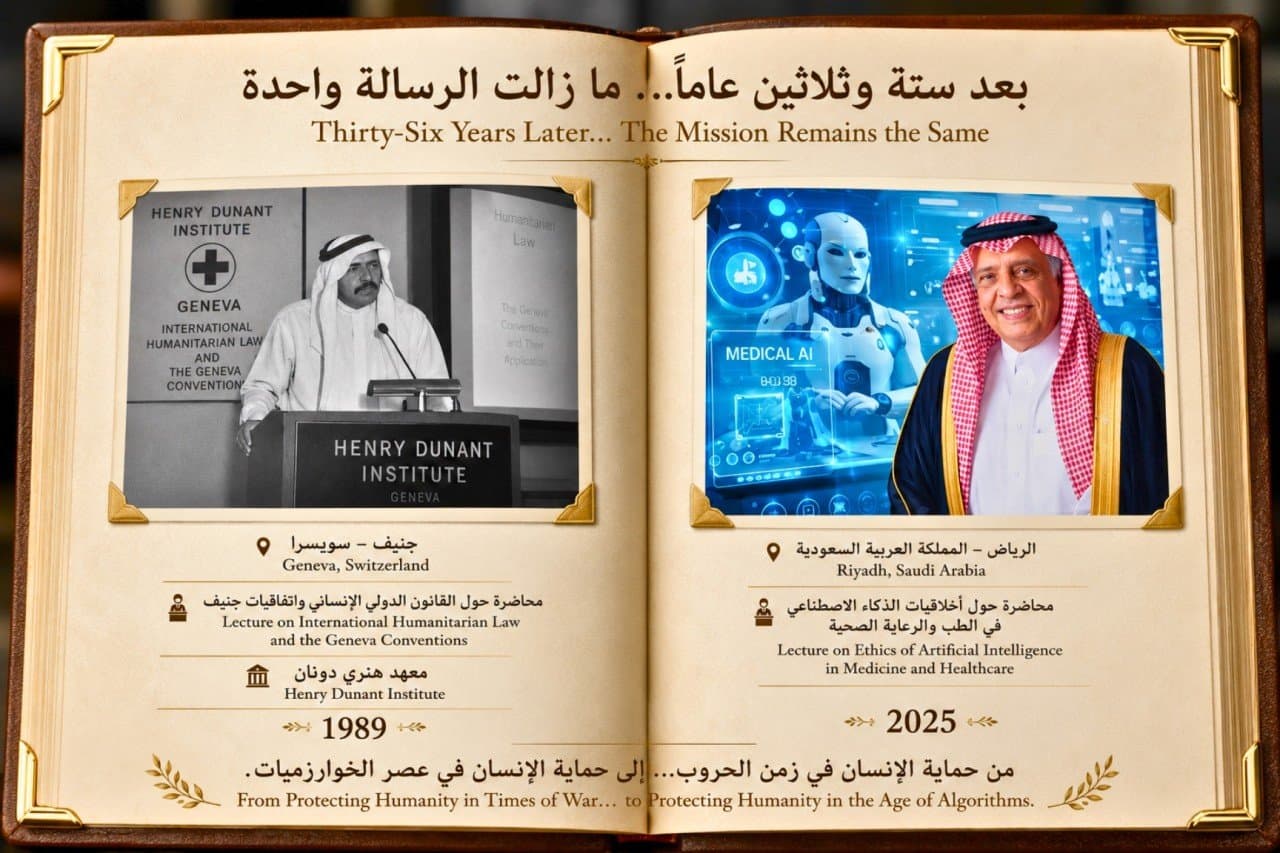
Thirty-six years apart, the mission remains the same: protecting people.
In 1989, I lectured on International Humanitarian Law and the Geneva Conventions at the Henry Dunant Institute in Geneva, during a period of my career devoted to humanitarian service. I later held a senior leadership role with the Iraqi Red Crescent Society during the Gulf War period, working amid some of the most challenging humanitarian circumstances of that era.
Today, the context is very different, but the underlying principle remains unchanged. My work in AI ethics and governance in healthcare is centred on ensuring that technological progress remains accountable to patients, clinicians and society.
From protecting humanity in times of war to protecting humanity in the age of algorithms, the technology has changed — but the responsibility has not.
Credentials & roles
Current and former appointments are listed separately for clarity.
- current
Visiting Professor — University of East London
UEL staff profile → - current
Founder, Honorary President and Chairman — Arab Organization for Artificial Intelligence in Healthcare (AOAIH)
- current
President of Middle East Affairs — Dental AI Association (DAIA)
- current
Columnist on medical AI — Asharq Al-Awsat
- current
Founder and Chairman — The Saudi British Medical Forum (SBMF)
- Qualifications
BDS, LDS RCS (England), MDS, MSc (University of London), MGDP RCS (England)
- former
Former Consultant — Eastman Dental Hospital, London
- former
Former faculty / academic affiliation — Eastman Dental Hospital & UCL Eastman Dental Institute, London
Awards & recognition
Exact titles, dates, awarding organisations and evidence links where available.
2025
Alan Turing Award in Dental Artificial Intelligence
Presented jointly by the Dental AI Association (DAIA) and the Global Summits Institute
Conferred June 2025, Sardinia, Italy · first British clinician recipient
BDJ coverage →2026
Certificate of Appreciation
UK Arab Academics Association (UKAAA)
2022
International Dentist of the Year
World’s Top 100 Doctors
Separate from the 2011 recognition of the same name
Referenced in BDJ (2025) →2011
International Dentist of the Year
James Hull Associates
Named at the James Hull Associates annual conference dinner, June 2011
BDJ — Honours and awards (2011) →2004
International Dental Excellence Award
British Dental Institution
1999
Dentist of the Year Recognition
Kuwait News Agency (KUNA)